

Plunge Keyhole-Back Mesh Dress PDF Sewing Pattern
Prepared after purchase. Digital delivery within 1 business day. A deep V front gathers into a low central fabric bridge in this planned plunge keyhole-back mesh dress. At the rear, a closed neckline bridge surrounds one long oval opening, while the skirt falls smoothly into a full-length hem.
Related guides
Full pattern details
Prepared after purchase. Digital delivery within 1 business day. A deep V front gathers into a low central fabric bridge in this planned plunge keyhole-back mesh dress. At the rear, a closed neckline bridge surrounds one long oval opening, while the skirt falls smoothly into a full-length hem.
Low front gathers and an oval back opening
- Deep V neckline with broad covered shoulders
- Symmetrical front folds secured into a small fixed self-fabric bridge at the low waist
- High shallow rear neckline with a closed shoulder-to-shoulder bridge above one elongated oval cutout
- Separate loose three-quarter sleeves gathered into narrow matching cuff edges
- Shaped hips and a long, gently flared skirt with a closed plain hem
- Fine stretch-mesh outer fabric over opaque matching stretch lining through the body and sleeves
The small front bridge anchors the gathers; it is not a belt or adjustable tie. The rear opening is framed on every side by the garment. The opaque lining follows the neckline and back-opening edges without filling those intentional openings. Deep charcoal shows the front and back, and warm taupe is another color of the same planned dress.
Mesh, lining and edge stability
A soft four-way stretch mesh with dependable recovery is the starting fabric direction. Pair it with an opaque stretch lining of the same color, testing both layers together for stretch, drape and weight. The lining needs to move with the outer fabric without pulling the neckline or changing the skirt fall. A stable woven is not a direct substitute.
The English guide will address controlling the low-front gathers, enclosing their small fabric bridge, supporting the deep neckline, finishing the oval rear edge and joining the sleeve cuffs. A matching lining lets the fine mesh surface remain visible while the garment fabric stays opaque. Final fabric quantities, stretch requirements and edge finishes will be established during preparation.
A complete fitting sample must check front coverage, tension around the back opening, shoulder stability, sleeve reach and seated comfort. The closed neck bridge and long skirt make dressing clearance a specific development check. The previews show no exposed fastening; final access details and any discreet opening will be resolved during preparation. No measured support level or tested fit is promised. Check the lower hem and stride room with the shoes intended for the finished garment.
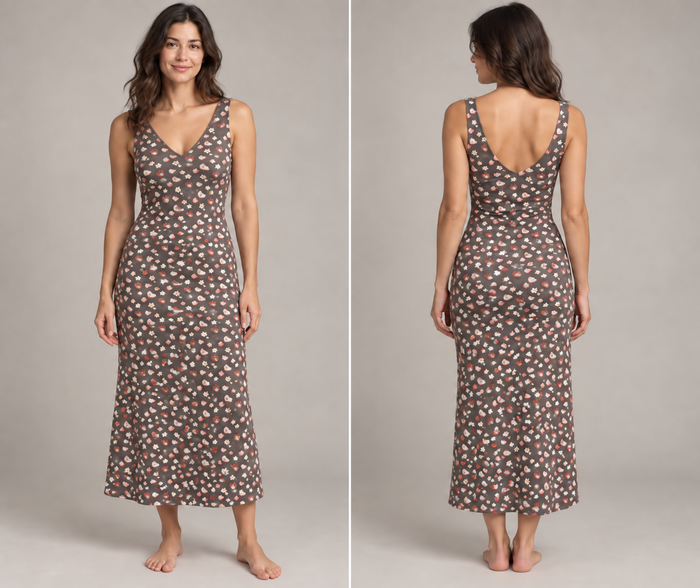
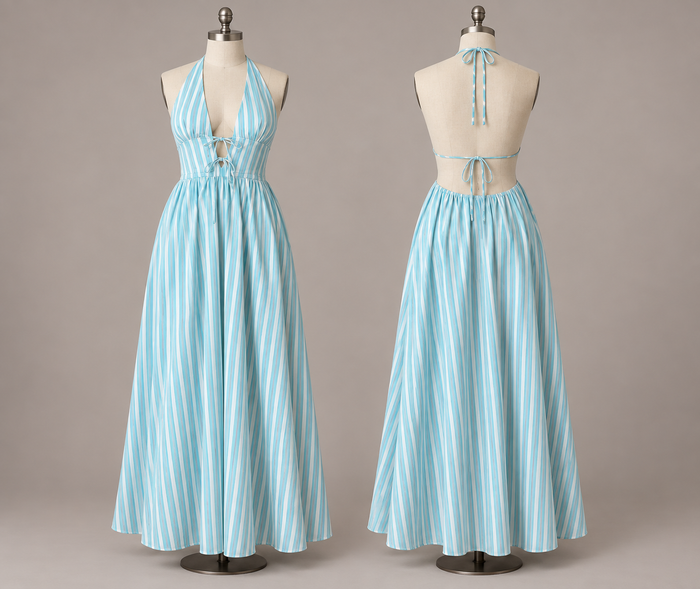
For a smooth sleeveless body with a lower rounded back, compare the V-neck low-back knit dress. The tie-front halter maxi dress uses woven fabric, adjustable upper ties and a gathered skirt.
Browse dress patterns, knit sewing patterns, maxi dress patterns, evening and formal dress patterns and women's sewing patterns.
Your digital order
Your $25 USD order covers preparation of a PDF sewing pattern and an English sewing guide for the design described here. Drafting begins after purchase. This First Release has not yet been drafted, sewn or fit-tested. Make a complete fitting sample before cutting final fabric.
The final size chart, finished measurements, material quantities, print formats, layouts and PDF page counts will be confirmed during preparation. Please contact Sewlore before ordering to check measurement and project suitability. Custom fitting is not included.
We will email your download link within 1 business day of payment, Monday to Friday, by the end of the next business day in Istanbul time (UTC+3). Files are not available for instant download. No finished garment, fabric or printed paper pattern is shipped. Read our pattern preparation and delivery details.
Images are AI-generated design previews, not photographs of sewn or fit-tested garments. Both colors illustrate one planned pattern.